
Common Species
Discover 5 species you can support in your garden
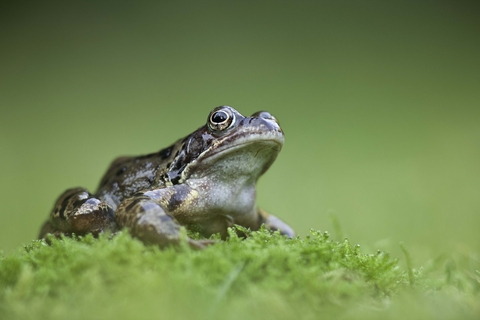
Photo: The Wildlife Trusts
Common Frog
Rana temporaria
The UK's most widespread amphibian, common frogs are familiar garden visitors. Adults range from olive-green to brown with dark blotches. They have smooth, moist skin and powerful jumping legs. During breeding season, males develop dark nuptial pads on their thumbs and croak to attract females. Can live up to 8 years in the wild.
Habitat
Gardens with ponds, wetlands, damp grassland, woodlands
Garden Tips
Create a wildlife pond with shallow edges and native plants. Provide damp refuges like log piles and long grass. Avoid using pesticides. Leave leaf litter for hibernation sites. Don't move frogspawn between ponds-let natural colonization occur.
Conservation Status
Common and widespread. Protected under UK law
Best Time to See
Year-round. Most visible February-March during breeding season
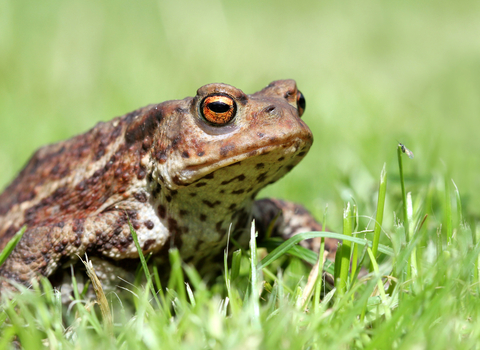
Photo: The Wildlife Trusts
Common Toad
Bufo bufo
Larger and more terrestrial than frogs, common toads have warty, dry-looking skin ranging from olive-brown to grey. They walk rather than hop and have distinctive copper-colored eyes with horizontal pupils. Toads are excellent pest controllers, eating slugs, beetles, and other garden invertebrates. Can live up to 40 years.
Habitat
Gardens, woodlands, grassland, heathland. Breed in ponds but spend most time on land
Garden Tips
Provide a breeding pond and terrestrial habitat with plenty of cover. Create toad holes in walls or log piles for daytime shelter. Install toad tunnels under roads if near breeding sites. Avoid slug pellets. Check compost heaps and bonfires before disturbing.
Conservation Status
Common but declining. Protected under UK law
Best Time to See
March-October. Mass migrations to breeding ponds in early spring
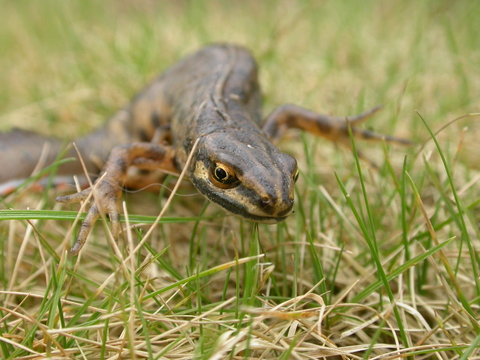
Photo: The Wildlife Trusts
Smooth Newt
Lissotriton vulgaris
The UK's most common newt species, smooth newts are small salamanders with smooth skin. Outside breeding season, both sexes are brown with darker spots. Breeding males develop a spectacular wavy crest along their back and tail, with bright orange bellies and spotted flanks. Females are plainer with orange bellies. Grow to 10cm long.
Habitat
Garden ponds, lakes, ditches. Terrestrial outside breeding season
Garden Tips
Create a wildlife pond with submerged and emergent plants for egg-laying. Provide stones and logs in the pond for shelter. Ensure easy exit points. Leave areas of long grass and log piles for terrestrial phase. Avoid introducing fish which eat newt eggs and larvae.
Conservation Status
Common and widespread. Protected under UK law
Best Time to See
March-October in ponds. Peak breeding April-June
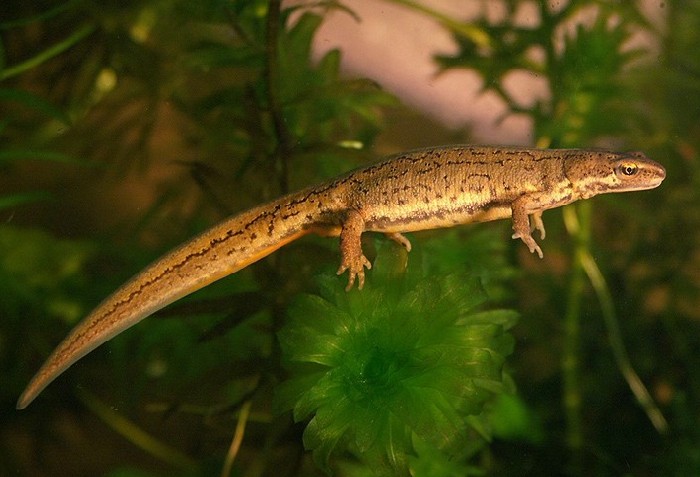
Photo: UK amphibian collection
Palmate Newt
Lissotriton helveticus
Similar to smooth newts but slightly smaller and preferring more acidic water. Breeding males have webbed hind feet (palmate), a low smooth crest, and a thin filament at the tail tip. Throat is pale pink without spots, unlike the spotted throat of smooth newts. Females are very difficult to distinguish from smooth newts.
Habitat
Acidic ponds, bogs, heathland pools, upland areas
Garden Tips
Similar care to smooth newts. Prefer slightly acidic conditions. Ideal for gardens near heathland or moorland. Create shallow, vegetated ponds. Provide plenty of aquatic plants for egg-laying. Maintain terrestrial habitat with cover.
Conservation Status
Common and widespread. Protected under UK law
Best Time to See
March-October. Breeding season March-June
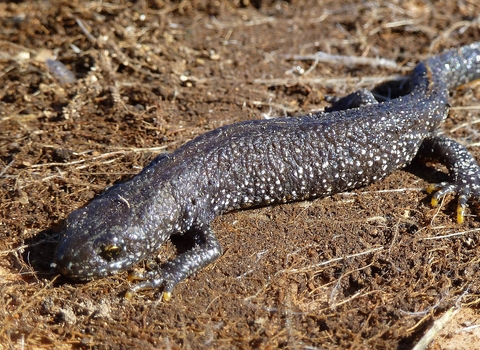
Photo: The Wildlife Trusts
Great Crested Newt
Triturus cristatus
The UK's largest and rarest newt, reaching up to 17cm. Warty dark skin with distinctive bright orange belly covered in black blotches. Breeding males develop an impressive jagged crest along the back and a silver stripe along the tail. Also known as the northern crested newt. A European Protected Species requiring special conservation measures.
Habitat
Larger ponds and lakes, particularly in lowland areas with good terrestrial habitat
Garden Tips
If present, your pond is special! Report sightings to local wildlife trust. Maintain large, fish-free ponds with varied depths and abundant vegetation. Provide extensive terrestrial habitat within 500m of pond. Never disturb without proper license. Seek expert advice for pond management.
Conservation Status
European Protected Species. Strictly protected under UK and EU law
Best Time to See
March-October. Breeding season March-June. Requires license to handle
How to Support Garden Amphibians
Simple, practical actions you can take to create a welcoming habitat for these species
Create a wildlife pond with shallow edges
Include native pond plants for cover and egg-laying
Avoid introducing fish, which eat tadpoles
Provide damp areas and log piles for shelter
Leave ponds to naturally colonize-don't move spawn
Create corridors to connect ponds in your area